Be yourself; Everyone else is already taken.
— Oscar Wilde.
This is the first post on my new blog. I’m just getting this new blog going, so stay tuned for more. Subscribe below to get notified when I post new updates.
Be yourself; Everyone else is already taken.
— Oscar Wilde.
This is the first post on my new blog. I’m just getting this new blog going, so stay tuned for more. Subscribe below to get notified when I post new updates.
Oftentimes writers can tend to lose sight of the prompt when writing a lengthy paper. Make sure you constantly remind yourself of the prompt to remain on topic.

Once you understand your prompt, layout your paper in an outline. Jot down what you want to say in each paragraph to help guide your thoughts.

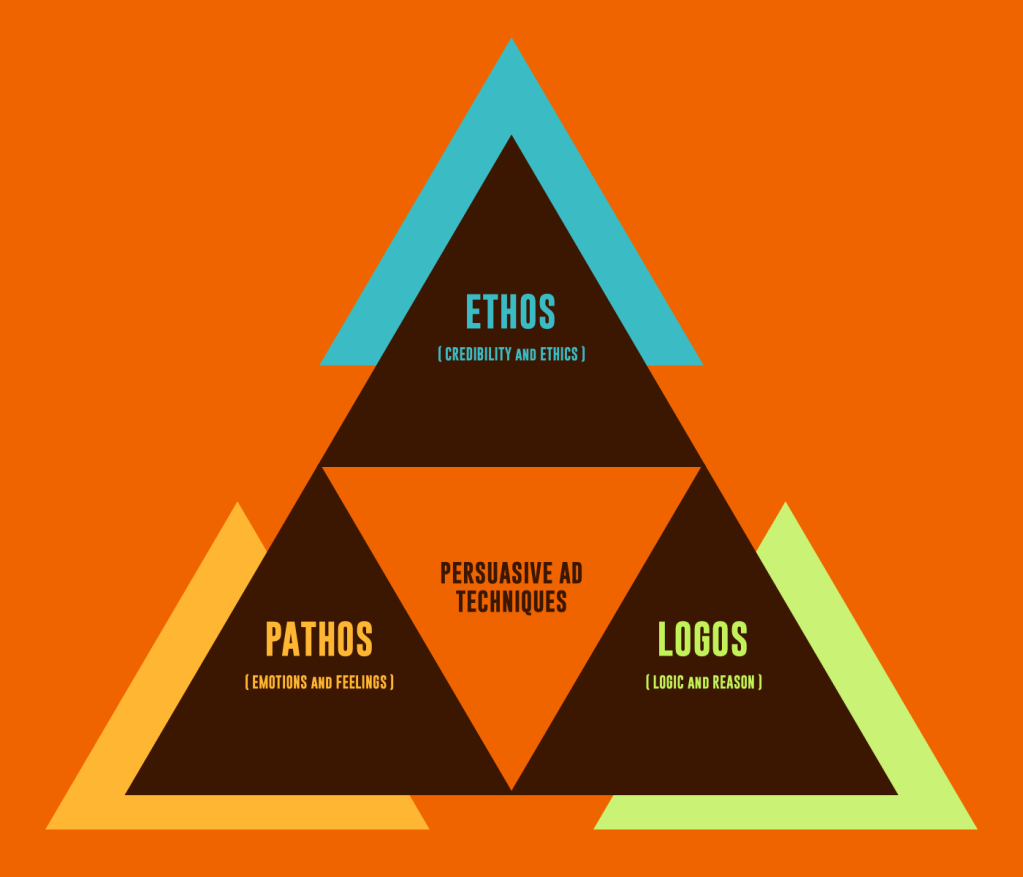
Once you have developed a clear outline. Start digging on the points you want to make. You want to try to find a mix of facts/statistics (logos), establish your credibility (ethos), and somehow connect to the audience (pathos).
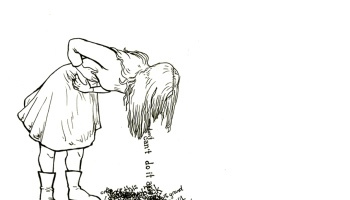
Try to write a complete rough draft of your paper. It doesn’t have to be perfect or pretty. Just word-vomit all your thoughts and research on the paper, and see what works and what doesn’t. It’s all trial and error.
As students we sometimes finish our rough draft and are so mentally tired we stop there. This is not an effective writing strategy. There is always something that can be made better. Take a break, and come back to it the next day. TAKE YOUR TIME.

Once you have revised, revised, revised. Do a once-over on the paper as a whole. Make sure it is in the correct format, and appeals to the audience you are writing to, and all grammar and spelling mistakes are taken care of.
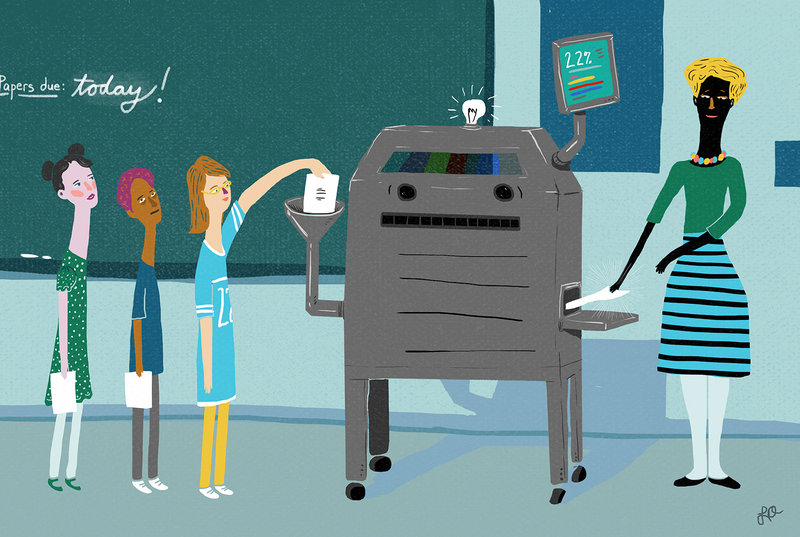
No paper is ever going to be perfect. Your teacher is there to help get your writing to as close to perfect as possible. Take their critiques and use it on future papers.

New York City – A hub of world-class performers all battling it out to land a gig on the world famous Broadway stage. The Big Apple is a place where anyone can achieve their dreams; it’s the land of opportunity. But recently Broadway has been slowly dimming the lights on fresh faces and turning their attention to those with namesake. To truly understand the reasons behind this we need to first understand Broadway began.
Broadway began in 1750 with the opening of a theatre company run by Thomas Kean and Walter Murray . The company was then expanded after the Revolutionary War into the Park Theatre which held over 2,000 patrons. Shakespearean plays were the most prominently performed during this time period. And following the theatre great success many more theatre started to pop up all over the city. Shows now expanded from straight plays to Operas and the first ever musical The Elves was produced. Jumping to the 19th Century patrons mainly saw “Princess Theatre” shows – which brought with them the iconic electric signs we see today. Thus, “The Great White Way” was born.
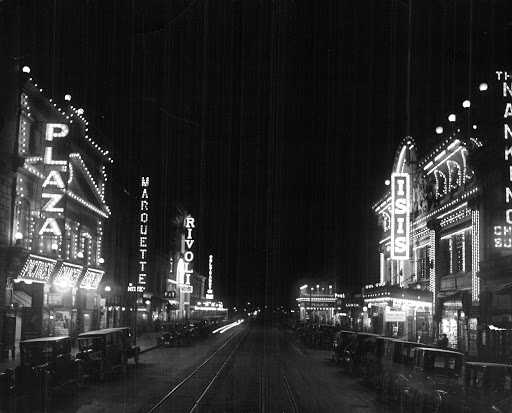
These shining lights would prove to be a cultural phenomenon as people clamored their way to sing and dance under their illumination. Stars like Hugh Jackman, Julie Andrews, Kristen Bell, Viola Davis, Barbra Streisand just to name a few all began their careers performing under the white lights. Shows like A Chorus Line, Rent, and Chicago have all swept the nation for their innovation and storytelling. All performed by fresh new actors who were living their biggest dreams in the big apple. While shows like these gave many world-renowned stars their big breaks. A shift has occurred, what once was “The Great White Way” of opportunity and beginnings has now turned into a place of bland casting and repetition.
Broadway has since dimmed from the Golden Age. Now it is a rarity for any new completely original show to be put in production. The 2019 Tony Awards only provided two completely original new musicals with the of the 11 available for nomination that year. Hadestown and The Prom, with Hadestown sweeping with 8 awards. Both of these Musicals were new, innovative, and discussed topics pressing to today’s society. Similar to that of the three Musicals listed in the previous paragraph. This innovation is a rarity. Why? It simply doesn’t sell. People have increasingly wanted to see something familiar on the stage. Tootsie and Beetlejuice being the most recent example. Although both absolutely spectacular shows the story and concept is completely derived from a movie. It’s nothing unique to broadway. And offers actors no real opportunity to stretch the limits of character development. That being said Broadway had its highest grossing year to date raking in just shy of $1.8 Billion. This record breaking year only further digs Broadway into doing what’s best for money and not for art.
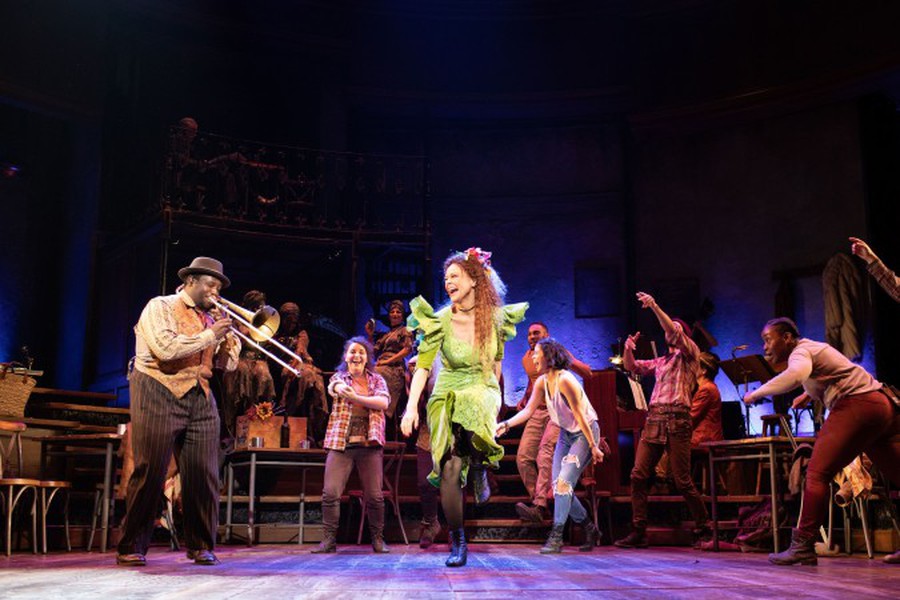

This digging is also prominently portrayed in broadway’s lack of tact in casting. People train for years to able to perform on these stages, but casting directors simply go with less talented “famous” counterparts. A few examples: Dove Cameron was cast as Clara in Light at the Piazza alongside broadway veterans Renee Fleming and Brian Stokes Mitchell. Dove Cameron has no true classical vocal training, but was simply cast as a marketing strategy. Similarly, Cameron Dallas of YouTube fame will be taking over the role of Aaron Samuels in the wildly successful Mean Girls musical. Again, a non-singer entering a world of renowned performers and taking opportunities away from those who I trained all their lives to step into a coveted role such as that. In fact, many of the actors who got their start on broadway (listed above) also prove as examples of this major issue. Most recently Hugh Jackman as Harold Hill in The Music Man.
Name-fame is great for the people at the top. Yes, it makes money. Yes, tickets will sell. But what happens next, what happens when the stars move on to the next project? Will The Music Man still sell without Hugh Jackman leading its charge? The simple answer is no – once these stars are gone people’s connections with the shows are lost. They have mended the star and the show and can’t see it any other way. It’s time to revive the revival. It’s time to bring back new faces to the world. Let new voices be heard, and let the stories speak for themselves.
“Dating” a word defined by the Webster dictionary as: ” [to] go out with”. Three simple words to define such a complicated life commitment. Growing up this word seemed so far out of reach. Something I watched play-out on Hallmark during the holiday season, but never something I could actually do. Why? Well I was this thing called “gay”, I just didn’t quite know it at the time. Perched on the arm of lazy-boy -I longed to be swept away by my own Prince Charming…preferably in the snow around Christmas-time. This desire persisted through much of my early-teens.
Social media and dating apps to gay people are like the bingo church to elderly people. It presented me with a plethora of potential Prince Charmings at my finger-tips. I didn’t know how to handle all of this. It felt like the glass window that stood in-front of dating had been shattered, and I was left to pick up the pieces. Except I’m not a glassworker and the window has zero chance of ever being returned to its original state. In a stat released by The Advocate same-sex relationships make up only 2% of the worlds relationships but of that percentage 70% of these couples met online.
Finding “love” through social media can broaden who you meet but also limit the authenticity of the “connection” (the quotes emphasize the sarcasm). It only capitalizes on the the very prominent hookup culture in the gay community. Dr. Greg Mendelson, a clinical psychologist who studies dating in the queer community, stated in an article on Global News: “There’s many advantages to being queer within the LGBTQ community, but within that, there’s a lot of people who do struggle to find a long-term partner”. This could stem from the deep emotional scars many LGBTQ+ people carry from difficult pasts or even presents. LGB adults are twice as likely to struggle from a mental health issue than heterosexual adults according the the National Alliance on Mental Illness. Long-term dating can often re-ignite these traumatic emotions felt from opression and marginilizarion from past experiences.
I experienced just this over break. I laid in my bed staring at the ceiling. My room set to a cool 65 degrees and it even cooler outside. I paced through thoughts in my head of how in the world am I gonna tell my parents that I am going on a date? I thought coming was difficult, but this, this was different. This was sealing the deal. It was solidifying to my parents that this was the life I am choosing to lead and there’s no turning back now. I felt like I was back at school sitting in my principal’s office explaining to him how I am trying to seek help for my homosexuality again (that’s a whole other post). It was a feeling of exposure, and vulnerability. Now I understood. I understood why dating as a gay person was so complex. Why people were so afraid of commitment. I took a deep breath, pushed the covers off me and headed downstairs.
This is an example post, originally published as part of Blogging University. Enroll in one of our ten programs, and start your blog right.
You’re going to publish a post today. Don’t worry about how your blog looks. Don’t worry if you haven’t given it a name yet, or you’re feeling overwhelmed. Just click the “New Post” button, and tell us why you’re here.
Why do this?
The post can be short or long, a personal intro to your life or a bloggy mission statement, a manifesto for the future or a simple outline of your the types of things you hope to publish.
To help you get started, here are a few questions:
You’re not locked into any of this; one of the wonderful things about blogs is how they constantly evolve as we learn, grow, and interact with one another — but it’s good to know where and why you started, and articulating your goals may just give you a few other post ideas.
Can’t think how to get started? Just write the first thing that pops into your head. Anne Lamott, author of a book on writing we love, says that you need to give yourself permission to write a “crappy first draft”. Anne makes a great point — just start writing, and worry about editing it later.
When you’re ready to publish, give your post three to five tags that describe your blog’s focus — writing, photography, fiction, parenting, food, cars, movies, sports, whatever. These tags will help others who care about your topics find you in the Reader. Make sure one of the tags is “zerotohero,” so other new bloggers can find you, too.

 Daily Dawson