1) Don’t let your thoughts be on a rollercoaster
Oftentimes writers can tend to lose sight of the prompt when writing a lengthy paper. Make sure you constantly remind yourself of the prompt to remain on topic.

2) Create an organized outline
Once you understand your prompt, layout your paper in an outline. Jot down what you want to say in each paragraph to help guide your thoughts.

3) Research your points and develop Logos, Pathos, and Ethos
Once you have developed a clear outline. Start digging on the points you want to make. You want to try to find a mix of facts/statistics (logos), establish your credibility (ethos), and somehow connect to the audience (pathos).

4) Do a test-run
Try to write a complete rough draft of your paper. It doesn’t have to be perfect or pretty. Just word-vomit all your thoughts and research on the paper, and see what works and what doesn’t. It’s all trial and error.

5) Edit, Revise, Repeat
As students we sometimes finish our rough draft and are so mentally tired we stop there. This is not an effective writing strategy. There is always something that can be made better. Take a break, and come back to it the next day. TAKE YOUR TIME.

6) Read your final product
Once you have revised, revised, revised. Do a once-over on the paper as a whole. Make sure it is in the correct format, and appeals to the audience you are writing to, and all grammar and spelling mistakes are taken care of.
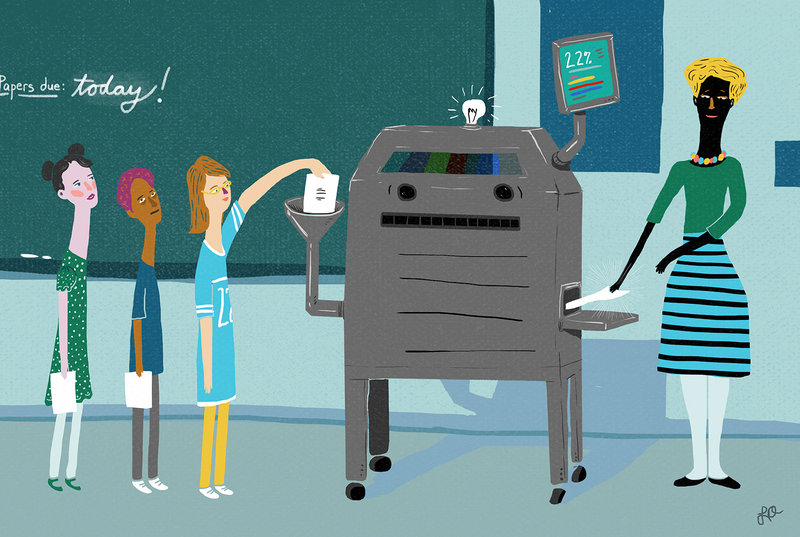
7) Listen and learn from teacher’s notes
No paper is ever going to be perfect. Your teacher is there to help get your writing to as close to perfect as possible. Take their critiques and use it on future papers.

 Daily Dawson